We are excited to announce that Zachary Newman Ph.D. will be joining the Kerlin lab later on in 2021. Zach received his Doctoral degree in Molecular and Cellular Biology from U.C. Berkeley and has since been working as a post-doctoral researcher there.
Please visit https://kerlinlab.umn.edu/ for current information
-
Kerlin lab moves to our new lab space at the CMRR
We’re excited to announce we’ve moved out of Jackson Hall and into our new space at the Center for Magnetic Resonance Research. We will be working alongside the other members of the medical discovery team and look forward to many collaborations.
Here are some pictures of the new space
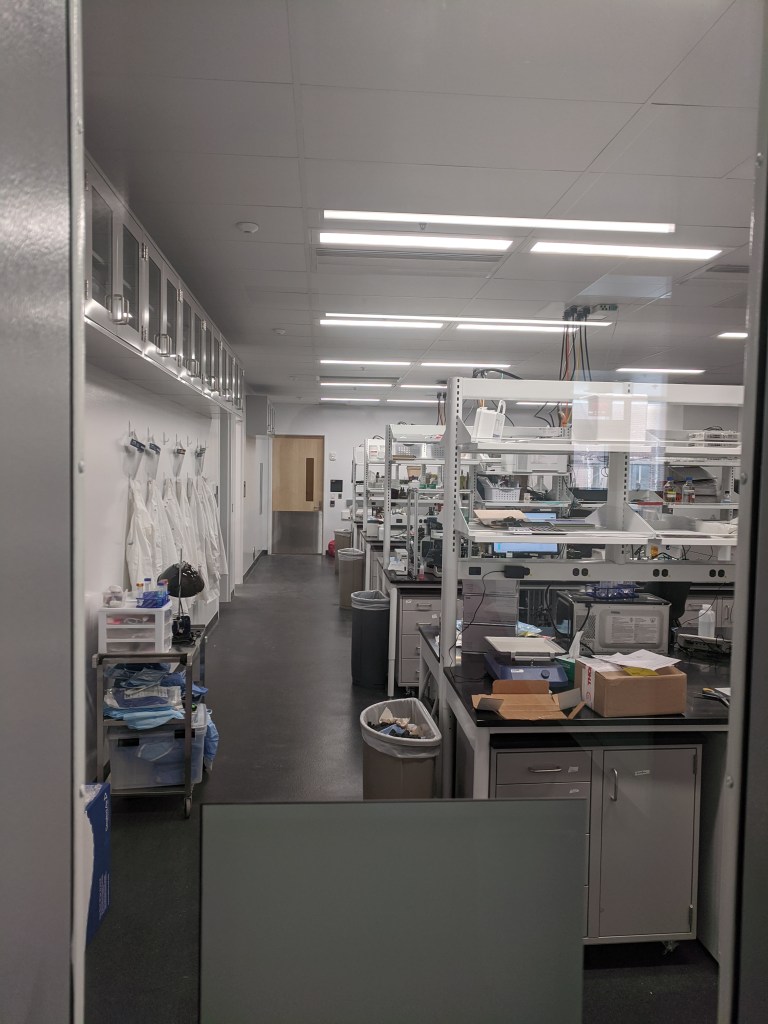
The shared space, it’s huge! 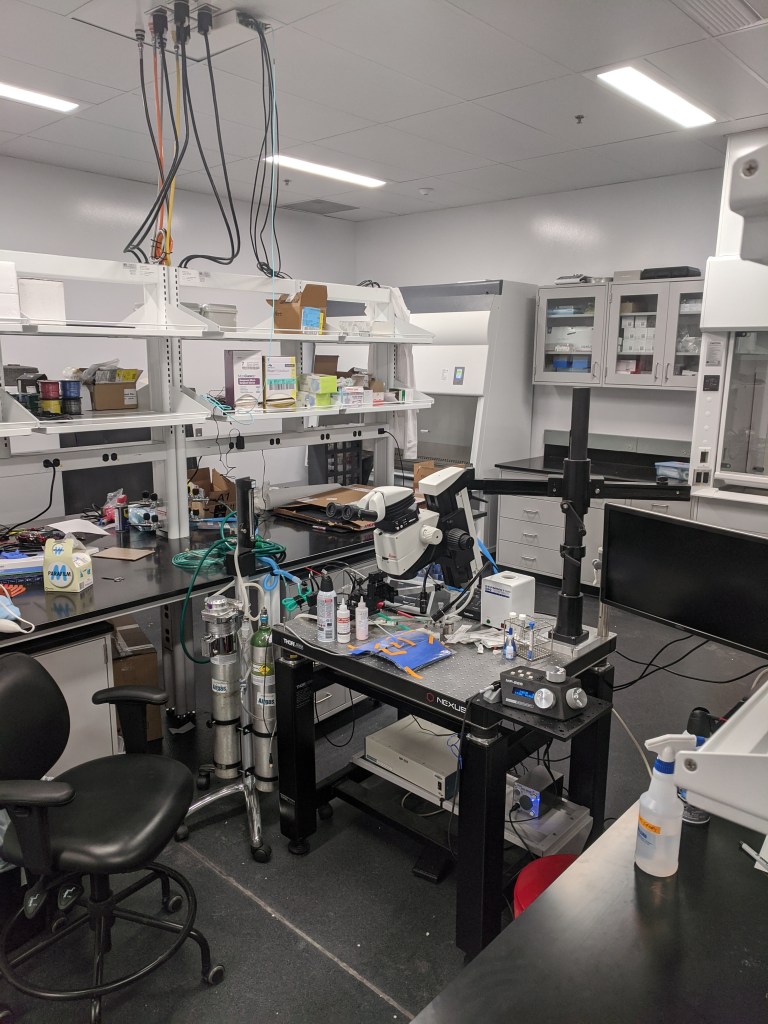
The new surgery station 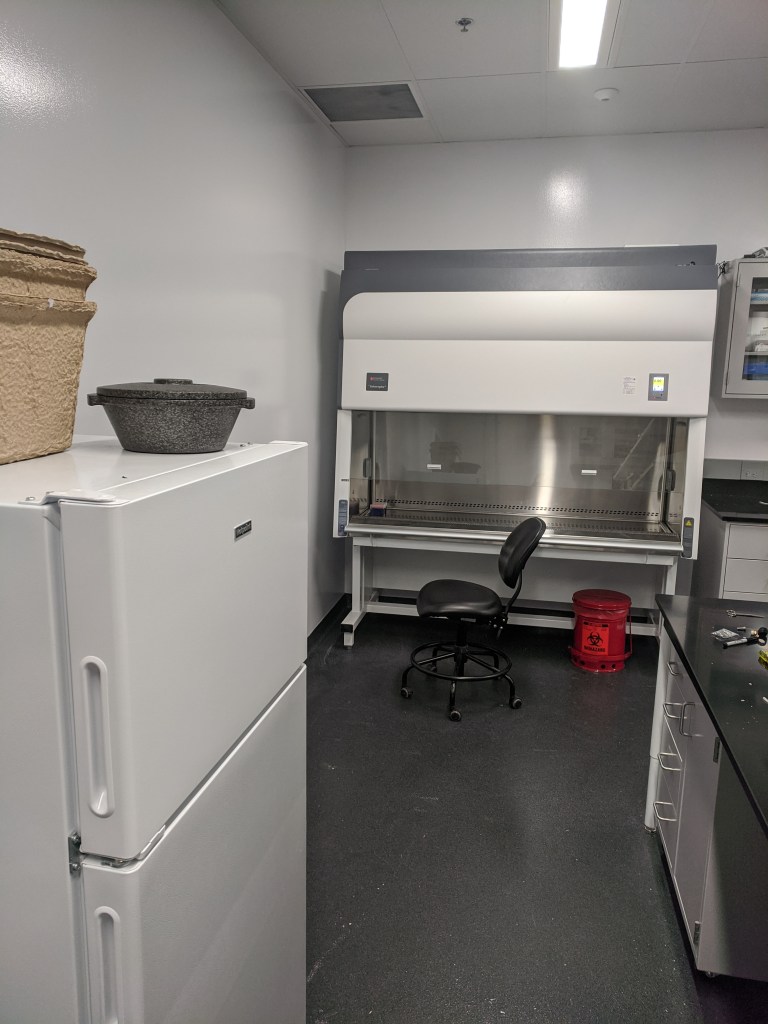
Huge new biosafety cabinet 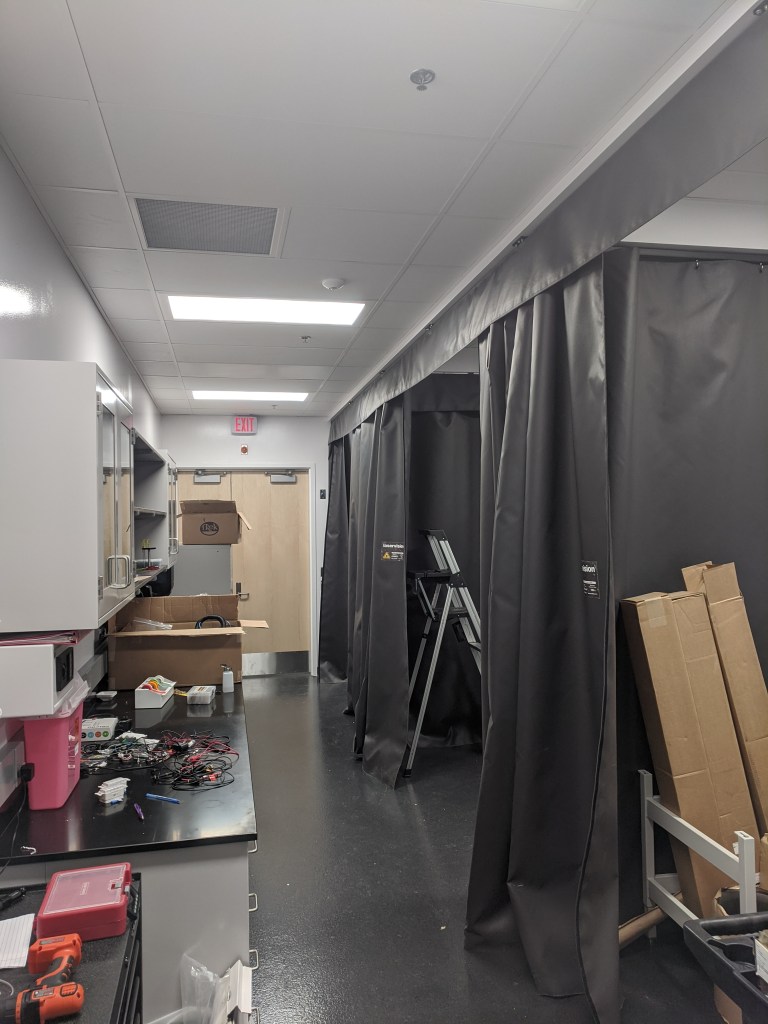
Our lab space with curtains creating rooms 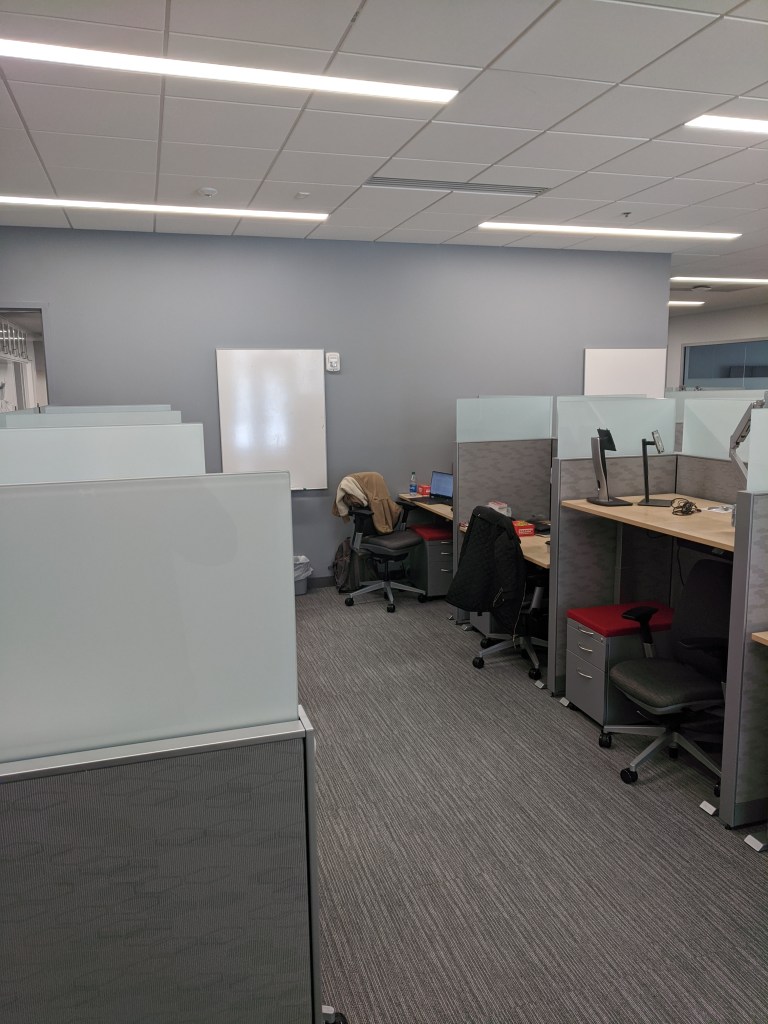
The shared office space 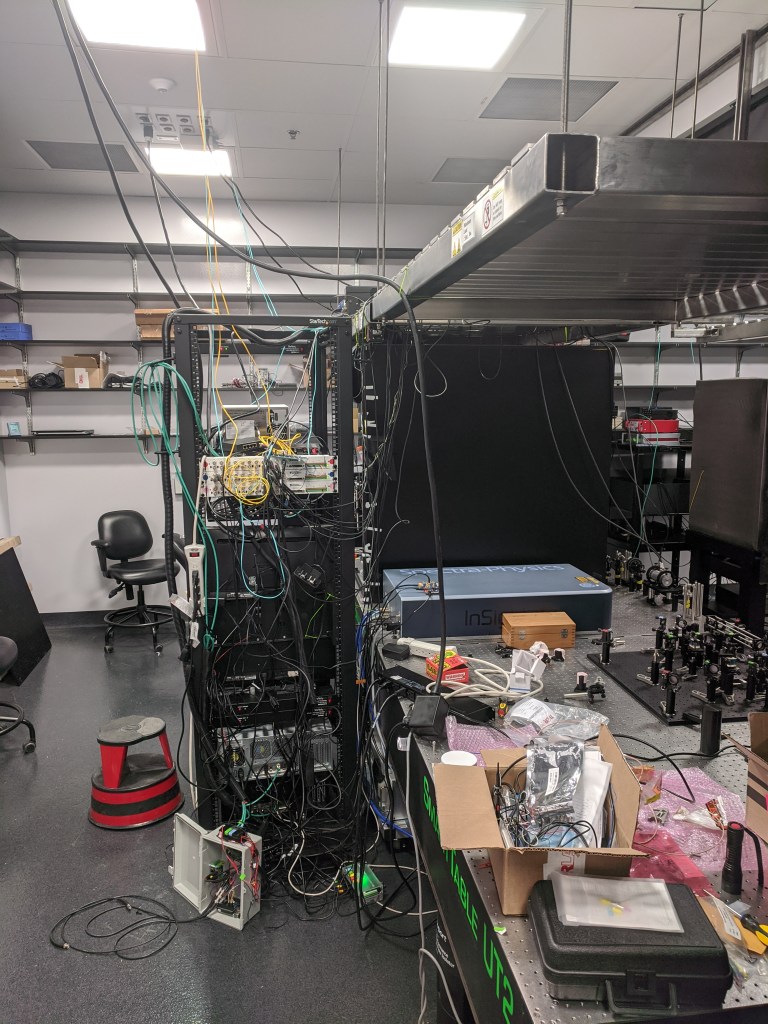
Setting up all our imaging equipment!
-
Mitchell Head joins the lab as a post-doctoral researcher
Coming from the University of Waikato, Mitchell Head has joined us and arrived in America. Welcome aboard!
-
Kerlin Lab awarded the Wallin Neuroscience Discovery Award
This award will support our general research activities, way to go!
The purpose of the Fund is to provide support for early-stage ideas and creative, pioneering projects in neuroscience that otherwise may go unfunded by conventional grant-making bodies. The ultimate goal is that such proposals will lead to new or continued funding through the National Institutes of Health, National Science Foundation or other federal/national agencies. The Fund is particularly interested in applications that align with opportunities for large federal funding initiatives e.g., The Brain Research through Advancing Innovative Neurotechnologies (BRAIN) initiative.
-
Jackson Joins the Lab
Jackson Scheib has officially joined our lab to work on his Ph.D. in Neuroscience. Welcome aboard!
-
Savannah joins the lab
We are happy to announce Savannah Bliese, Psychology and Neuroscience BS, University of Ohio – Miami, is joining the lab as a Researcher! Welcome to the team!
-
Press release on Aaron’s discoveries at Janelia
U of M Researcher Discovers Subcellular Computations Within the Brain During Decision-Making
New research suggests that during decision-making, neurons in the brain are capable of much more complex processing than previously thought. In a study published in eLIFE, researchers, including first author Aaron Kerlin, PhD, who is an assistant professor in the Department of Neuroscience and member of the Medical Discovery Team on Optical Imaging and Brain Science at the University of Minnesota Medical School, were the first to develop a microscope that rapidly images large stretches of the dendrite where neurons receive thousands of inputs from other neurons. Dr. Kerlin conducted this research while at Janelia Research Campus and found that neighboring inputs to small sections of dendrite tended to represent similar information about upcoming actions. The results show that during decision-making, there are a multitude of small sections of dendrite throughout each neuron that process information before it is sent to other neurons. This suggests that much more complex processing can occur in the brain through these many, tiny segments of dendrite. Not only do these findings help researchers understand what the total computational power of the brain might be but they also may help to better understand some diseases. In many cognitive disorders, including autism, it is known that disruption of proteins related to the function of synapses—the connections between neurons—is likely to be involved. It is also likely that there are disruptions of these local computations, which have been difficult to investigate before. “Now that we have these findings and approaches, we may gain a better understanding of what’s happening in diseases that affect synaptic function and why they affect information processing in the way they do,” Dr. Kerlin said. Dr. Kerlin believes that future research may include investigating patterns of local processing in neurons within mouse models of autism to determine which dendritic computations are disrupted and over what scale the disruptions occur. Dr. Kerlin also created a web browser that allows the entire dataset to be publicly available to other researchers, which is part of his dedication to advancing the Open Science movement. He hopes that this will encourage theorists and other researchers to make new discoveries with this rich dataset and embark on further research within this field.
Source: U of M Researcher Discovers Subcellular Computations Within the Brain During Decision-Making
-
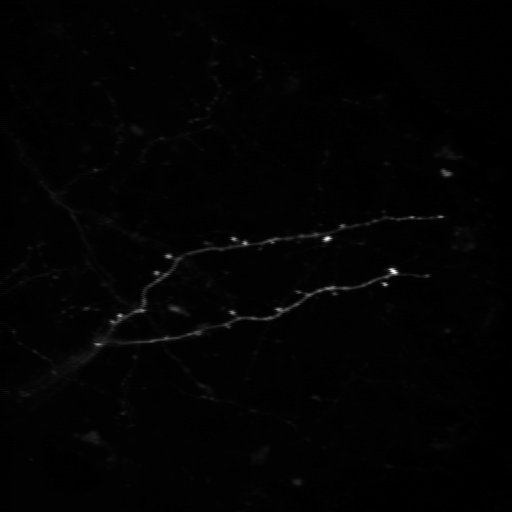
First Image of Dendritic Spines
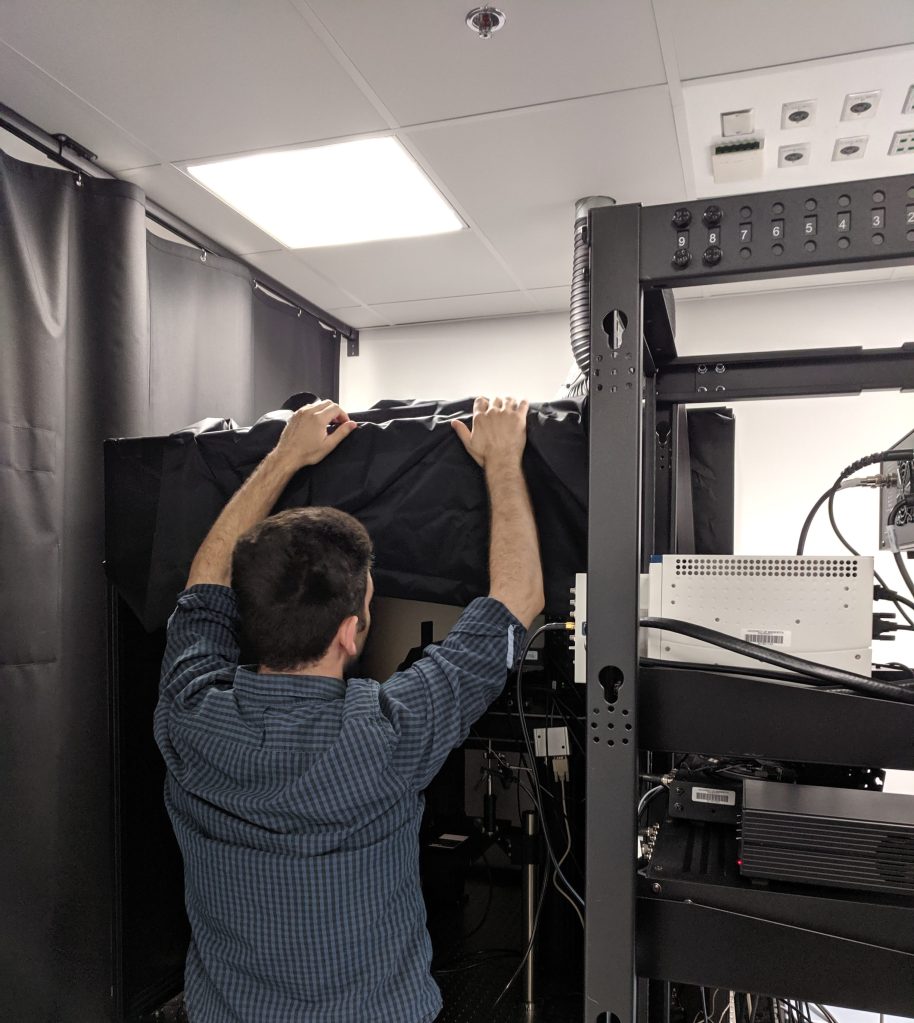
Aaron getting the scope ready for imaging -
First in vivo capture of neurons
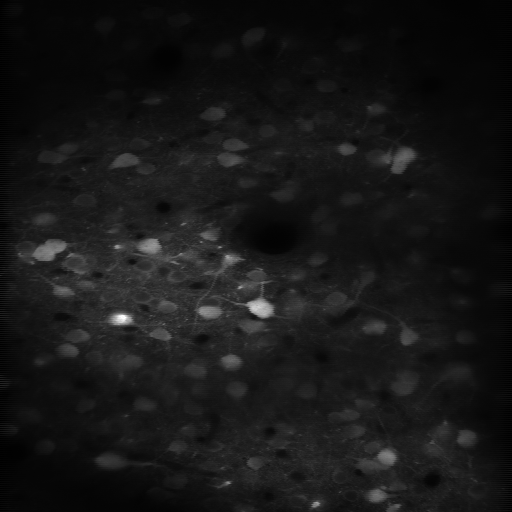
GCamp labeling of neurons in mouse KL1001-2 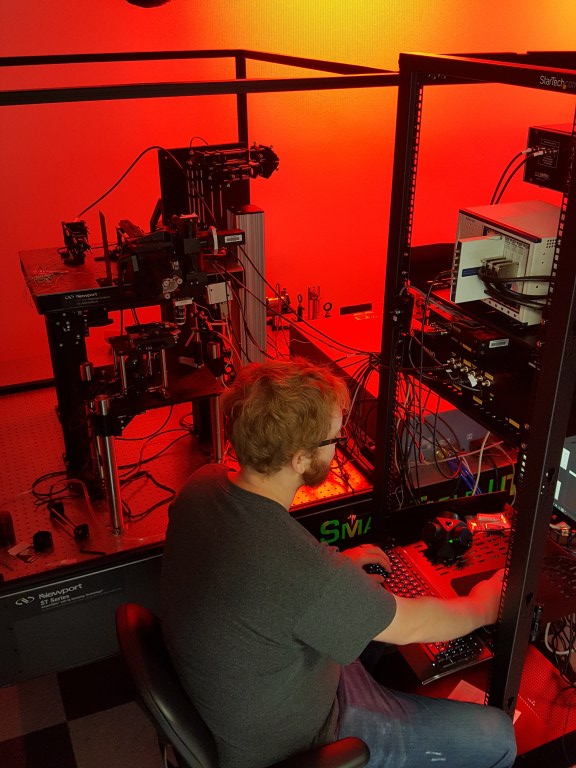
The microscope/laser control center
 Kerlin Lab | Neuroscience | University of Minnesota